

I spent time using King James Bible as a practical reading app rather than treating it like a digital shelf of scripture. That distinction matters. Its strongest quality is not visual novelty; it is the way it turns the King James Version into something I can keep close, open quickly, and use without depending on a connection. For anyone who already prefers the KJV, that simple approach is genuinely useful.
This free Books & Reference app comes from Warp Studios Bibles and is suitable for everyone. It has been available since Apr 11, 2013, and its current version is 3.3.22, with Android 5.0 or later required. The app has reached over five million installs, earned a 4.7 average from around fifty-six thousand ratings, and collected roughly eight thousand reviews. Those figures suggest a well-established reader, but I still think its value depends on whether you want a focused KJV tool rather than a broad study platform.
How the everyday reading workflow feels
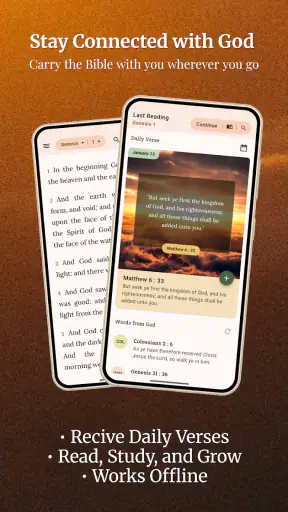
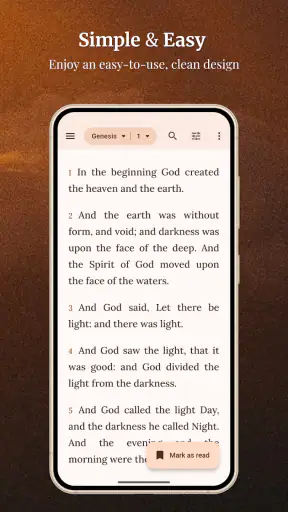
The basic routine is pleasantly direct: open the app, choose a book and chapter, and start reading. There is no need to carry a physical Bible for a short commute, a quiet moment before bed, or a conversation where I want to check a passage quickly. The offline design is especially important here. I can read in places where mobile service is unreliable, and I do not have to plan around a web page loading at the right time.
That offline access also changes how I use it during the day. If I am waiting in a queue, I can continue a reading habit without turning the moment into a search for a signal. It works well for someone who wants the Bible available during travel, in a building with weak reception, or simply in a phone setup where fewer online dependencies are preferable.
The KJV wording is the center of the experience. Readers who enjoy its traditional language will find that the app stays focused on that translation instead of making the screen feel like a comparison dashboard. I appreciate that restraint. When I am reading for reflection, switching between several versions can become a distraction, and this app makes it easy to remain with one text.
On the other hand, that same focus is a real boundary. If you regularly need modern-language translations, side-by-side comparison, extensive cross-references, or a large library of scholarly resources, this is unlikely to replace a full-featured Bible study service. It is better understood as a reliable KJV reader with supporting tools than as a complete research environment.
Using it for short sessions and longer reading
For a short session, I found the app most useful when I began with a clear purpose. I might open a familiar passage, read a daily verse, or look up a chapter during a discussion. The interface does not force a complicated preparation ritual, so the app suits people who want to move from phone unlock to reading with very little friction.
Longer sessions benefit from a different habit. Instead of jumping randomly through passages, I prefer choosing a book and continuing in order. That makes the app feel more like a personal reading companion than a lookup tool. The KJV can require patience because of its older vocabulary and sentence structure, so reading a manageable section and pausing to consider it works better for me than rushing through several chapters.
A realistic example is an evening routine after work. I can put the phone on a quiet surface, open the daily verse or the chapter I am following, and read for a few minutes without opening a browser or another social app. The app does not create the discipline by itself, but its offline, focused format removes several excuses that often interrupt a small daily habit.
For group use, it is handy when everyone is working from the KJV and needs a passage quickly. I would not choose it as the only tool for a study group that expects detailed annotation, translation comparison, or academic reference material. In that setting, a more expansive study app may be the better shared workspace, while this remains a fast personal reader.
Daily verses and study-oriented use
The daily verse feature gives the app a natural starting point for people who do not want to decide what to read each time. I see it as a prompt rather than a complete devotional plan. A single verse can encourage a brief pause, but readers who want guided commentary, structured lessons, or a long-term curriculum will need to add those elements themselves.
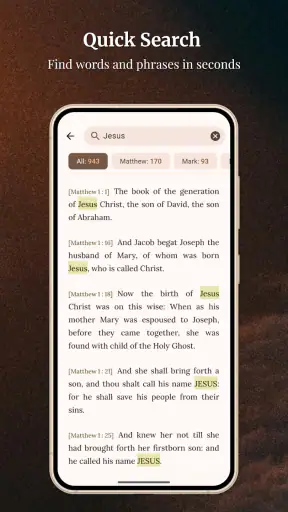
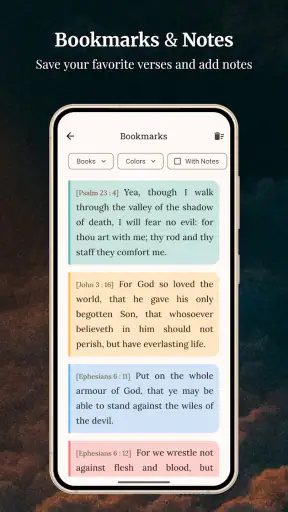
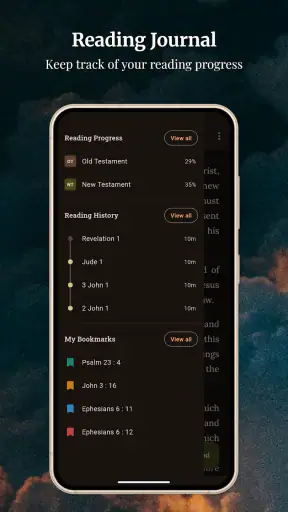
The study tools are useful when I want to move beyond simply scrolling through text. They make the app more flexible than a plain document viewer, especially when I am looking up a passage and then deciding whether to continue reading around it. Still, I would approach these tools with the expectations of a lightweight mobile reader. They support personal exploration, but they do not turn the app into a professional concordance or a full digital library.
One practical tip is to separate lookup sessions from reading sessions. When I am searching for a verse during a conversation, speed matters. When I am reading privately, I try not to keep jumping between references. Treating those as two different workflows helps me avoid turning a reflective session into a chain of unrelated searches.
Settings, shortcuts, and repeatable habits
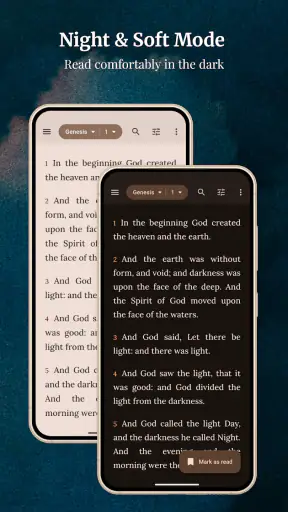
The most worthwhile setup work is modest. I would first adjust the reading experience until the text feels comfortable for the length of session I expect. A screen that works for a quick lookup may not be ideal for fifteen or twenty minutes of reading. Checking the available display and reading controls before settling into a routine can prevent unnecessary strain and make the app feel more personal.
I also recommend exploring the daily verse and study-related options early instead of leaving them as background features. The point is not to activate everything. It is to decide whether the app will serve mainly as a reference tool, a daily prompt, or a regular reading companion. Once that decision is clear, the interface becomes easier to navigate because I know what I am opening it to accomplish.
For repeat use, I rely on a simple sequence: open the app, go to the passage or daily verse, read without multitasking, and use the study tools only when a question comes up. This sounds basic, but it is more effective than trying to make every session comprehensive. The KJV rewards slower attention, and a repeatable pattern keeps the app from becoming just another icon I open briefly and abandon.
The best improvement is usually a better reading habit, not a more complicated setup. King James Bible is already designed around access to the text, so adding too many steps can work against its main advantage. I would keep the arrangement that gets me reading fastest and reserve deeper exploration for moments when I genuinely need it.
Making offline access work for you
Offline reading is more than a convenience for travel. It is useful for reducing interruptions. When I use a web-based alternative, a weak signal, browser tabs, notifications, and page loading can all pull attention away from the passage. With this app, the reading experience is more self-contained, which makes it suitable for quiet environments and planned breaks from constant connectivity.
A good habit is to open the app before leaving home if I know I will want a passage later. That lets me confirm that the reader is ready while I still have a comfortable connection, rather than discovering during a trip that I should have prepared something. The app’s offline purpose is clear, but disciplined preparation still makes any offline workflow smoother.
This is also where the app compares favorably with a printed Bible for convenience. A physical copy can be easier on the eyes for extended reading and has a satisfying sense of place, but it is less practical to carry everywhere. The phone version wins for portability and quick reference. I would use the printed book when I want a slower, screen-free session and the app when access and speed matter more.
Where it is faster than broader alternatives
Compared with a general Bible platform, this app feels less crowded when my target is simply the KJV. Larger alternatives often make sense for people who need several translations, audio, commentary, community features, or extensive note systems. Their breadth can be valuable, but it can also add visual and mental overhead to a straightforward reading task.
King James Bible is a better fit when I already know the translation I want and do not need to compare it with another version every few minutes. The focused scope makes a quick passage check feel more immediate. It is also a sensible choice for someone who wants free access first, while remembering that in-app purchases range from $0.99 to $3.49 per item. The core price is free, but I would still review any optional purchase screen carefully before confirming anything.
Compared with a basic browser search, the app has a more consistent reading environment and does not make me sort through unrelated pages. Browser search can be superior when I need commentary, historical background, or a passage from another translation. The choice depends on the question: this app is strongest when the answer is inside the KJV text and I want to reach it quickly.
Advanced use without pretending it does everything
Experienced users can get more from the app by treating study tools as a second layer rather than the main interface. I like reading a passage once without interruption, then returning to investigate a word, verse, or nearby context. That two-pass approach is more useful than stopping at every unfamiliar phrase, especially with the KJV’s formal language.
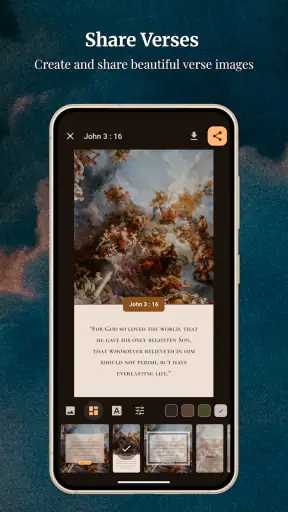
Another effective pattern is to use the daily verse as a doorway into context. Instead of reading only the highlighted verse, I can continue into the surrounding passage and see how the thought develops. This avoids one of the common problems with verse-based routines: treating an isolated line as if it were the entire message. The app makes the initial prompt convenient, while the responsibility to read context remains with me.
There are limits to this method. A reader who expects robust personal organization, extensive annotation, advanced research filters, or a large collection of translations may find the app too narrow. I would also skip it if the KJV is not the version I want to read regularly. Convenience cannot compensate for a translation that does not suit my preferences or comprehension.
The age rating of Everyone makes it approachable for households and younger readers, but suitability does not remove the need for guidance. The traditional language can be difficult, and a child or new reader may benefit from an adult explaining unfamiliar words. If accessibility in modern English is the priority, another Bible app with contemporary translations may be a better starting point.
Who should choose it, and who should look elsewhere
I would recommend it to KJV readers who want a dependable offline copy, a daily reading prompt, and study assistance without signing up for an elaborate digital ecosystem. It is also a good match for people who frequently need a passage while away from home, or who prefer an app that keeps its attention on one established translation.
I would be more cautious for serious students, ministers, language learners, and anyone building a heavily cross-referenced research library. They may need tools beyond what this focused reader is designed to provide. A broader study application or a combination of print resources and specialized references could serve them better.
The developer, Warp Studios Bibles, has kept the central idea clear: make the KJV available in a compact mobile format and add practical ways to engage with it. The long presence of the app and its strong user response make it feel established rather than experimental, but popularity should not obscure the central trade-off. Its simplicity is an advantage only if simplicity matches your reading needs.
After using it as a daily reader, quick reference, and offline companion, I see King James Bible as a focused tool that succeeds by staying close to its purpose. It will not satisfy every kind of Bible study, and the traditional text may demand more patience than a modern translation. Yet for the right reader, those are manageable limitations.
My recommendation is straightforward: choose it if you want the KJV ready on your phone, value offline access, and prefer a repeatable reading routine over a crowded collection of extras. Set it up for comfortable reading, use the daily verse as a prompt rather than a substitute for context, and bring in the study tools when a passage deserves a closer look. If that sounds like the way you already read, this free app is an easy one to keep available.


